Direct manufacturer solutions engineered to comply with international certifications, offering custom integrations for high-speed automated lines in industrial centers across Bangkok, Pathum Thani, and Rayong.
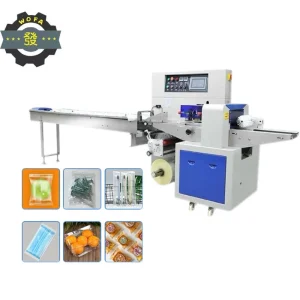
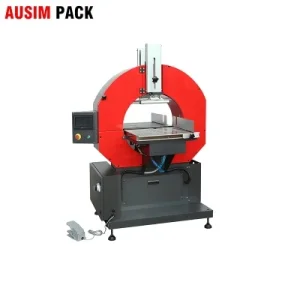
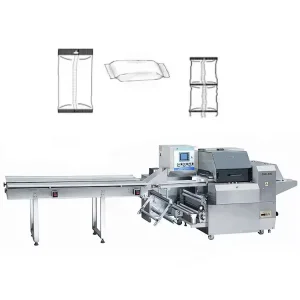
As Southeast Asia's second-largest economy, Thailand is undergoing a monumental shift toward advanced manufacturing under its national "Thailand 4.0" development model. At the epicenter of this transition are the packaging sectors of the Eastern Economic Corridor (EEC), driving demand for mechanical precision, energy efficiency, and scalable throughput. Historically reliant on intensive manual labor for secondary packaging, local enterprises in Chonburi, Rayong, and Samut Prakan are aggressively transitioning to HFFS (Horizontal Form-Fill-Seal) lines.
The imperative for this shift is multifaceted. First, labor cost escalation alongside strict post-pandemic sanitary regulations has rendered manual or semi-automated packaging lines unviable for high-volume processors. Second, Thailand’s status as the "Kitchen of the World" places it as a leading global exporter of processed seafood, poultry, canned goods, ready-to-eat meals, and tropical agricultural products. To retain global competitiveness, Thai producers must ensure that packaging conforms to the rigorous standards of international importing countries—particularly regarding seal integrity, hermetic security, shelf-life extension, and compliance with Halal standards.
Expert Insight: Transitioning to automated horizontal flow wrappers eliminates human contamination vectors, reduces plastic film wastage by up to 22%, and maintains the hermetic barrier required to sustain modified atmospheres (MAP) for perishable tropical goods.
Modern procurement strategy in Thailand focuses deeply on multi-axis servo synchronization. Traditional mechanical drive chains with gears and shafts present maintenance liabilities, especially in humid environments like Samut Sakhon or Pathum Thani. Multi-axis servo-driven systems allow engineers to adjust packaging speed, product length, and sealing parameters via intuitive HMI (Human-Machine Interface) touchscreens, without mechanically retooling the system. This capability decreases changeover downtime from hours to minutes—a crucial advantage for co-packers serving multiple retail brands.
Additionally, material-saving initiatives play a major role. With Thailand’s government proposing strict measures on plastic reduction, horizontal packaging machines must handle thinner, bio-based, or recyclable mono-material films. Advanced heat sealing systems and ultrasonic welding modules are now utilized to seal these eco-friendly materials without warping or burning them. This represents a substantial technical upgrade over legacy packaging platforms.
Global sourcing managers for multinationals in Bangkok are no longer looking for mere machine fabricators; they seek engineering partners with deep domain expertise. Buying packaging machinery demands a high level of Experience, Expertise, Authoritativeness, and Trustworthiness (E-E-A-T). Equipment must run continuous shifts—often 16 to 24 hours a day. Any unplanned downtime of a primary flow wrapper can halt an entire production plant, accumulating thousands of dollars in lost yield per hour.
To mitigate this risk, global buyers look for manufacturers that incorporate name-brand, globally serviceable components—such as Siemens, Mitsubishi, Omron, and SMC pneumatics. The inclusion of standardized global parts ensures that local maintenance teams in Thailand can easily source replacement components and receive immediate remote diagnostic support. In the table below, we break down the critical features that distinguish high-performing horizontal packaging machinery from low-cost, high-risk alternatives.
| Core Module | Standard Mechanical Wrapper | Advanced Multi-Servo HFFS Machine | Thai Production Impact |
|---|---|---|---|
| Control Architecture | Single motor, chain-driven gears | Multi-axis independent servo motors | Eliminates mechanical backlash; precision length cutting. |
| Sealing Mechanism | Rotary heat sealer jaws | Box-motion or Rotary with D-cam profile | Allows longer sealing times; ensures leakproof seals for MAP. |
| Sanitation Grade | Standard painted carbon steel structure | SUS304 Stainless Steel (SUS316 optional) | Prevents corrosion in humid environments; easy washdown. |
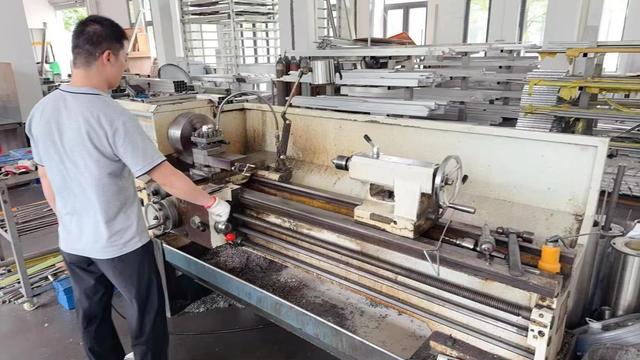
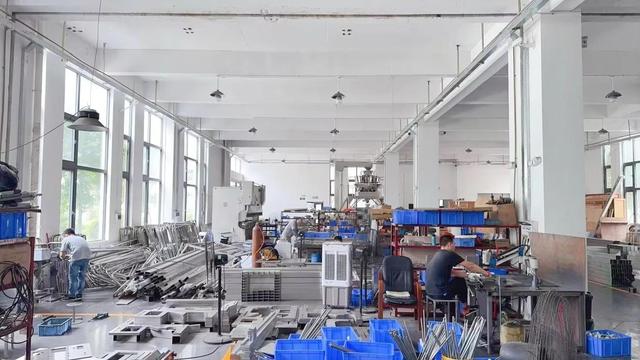
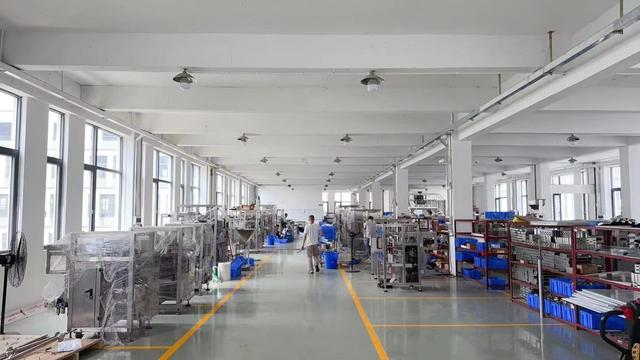
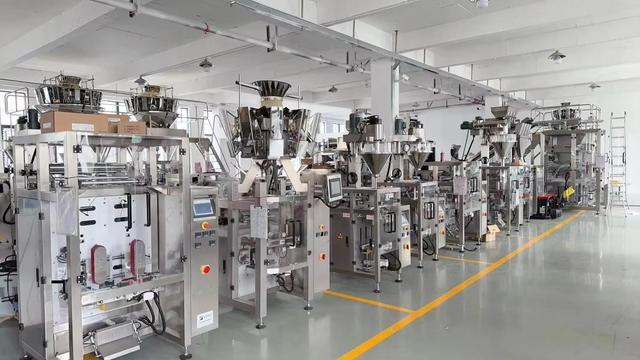
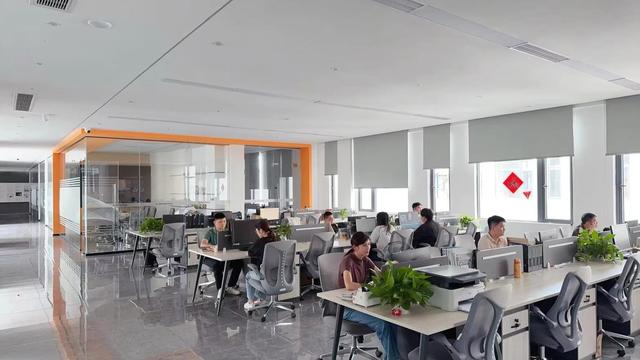
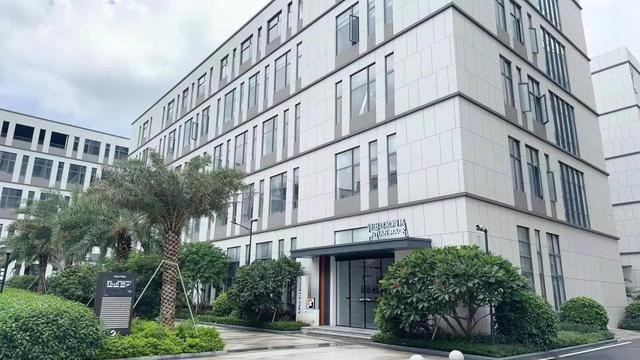
In the global machinery ecosystem, supply chain resilience is synonymous with operational continuity. Dongguan JSG Machinery Co., Ltd. represents the apex of Chinese Factory 4.0 manufacturing capacity. Established in 2010, the company occupies a massive modern production facility spanning 20,000 square meters in Dongguan, Guangdong Province—the global epicenter of precision manufacturing. Employing a team of over 220 specialists, JSG leverages computerized CAD/CAM engineering, high-precision CNC machining centers, and automated assembly workflows to build world-class horizontal packaging machinery.
This vast manufacturing capacity gives JSG a significant advantage over competitors: supply chain control. Unlike smaller workshops that assemble machines from outsource-milled parts, JSG maintains full control over its fabrication cycle—from CNC machining of critical sealing jaws and structural plates to system integration and programming of custom PLC software. This vertically integrated manufacturing guarantees that every component meets rigorous tolerance specifications. It also shortens delivery cycles, enabling fast sea freight shipping from Shenzhen or Guangzhou ports to Laem Chabang, Thailand, within 7 to 10 days.
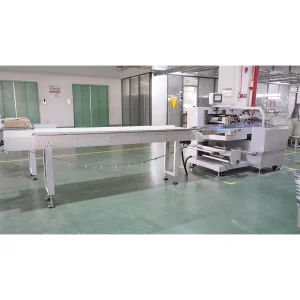
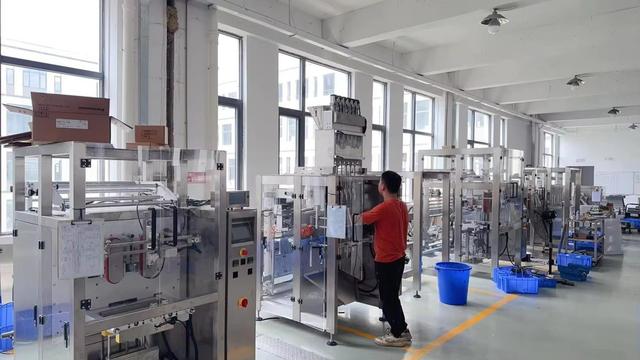
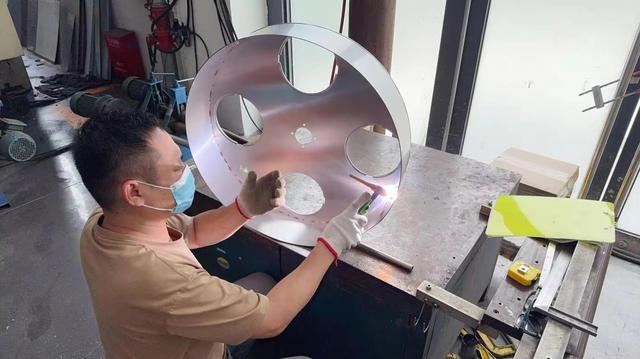
For the Thailand market, JSG provides highly integrated OEM/ODM options. Their engineering team can customize film feed directions, adapt to localized power grids (380V, 50Hz, 3-phase), incorporate thermal printers or labeling systems, and integrate vertical multi-lane filling scales or robotic cartoning machinery. Below, we showcase our actual fabrication and testing facilities to verify our physical capability and scale.
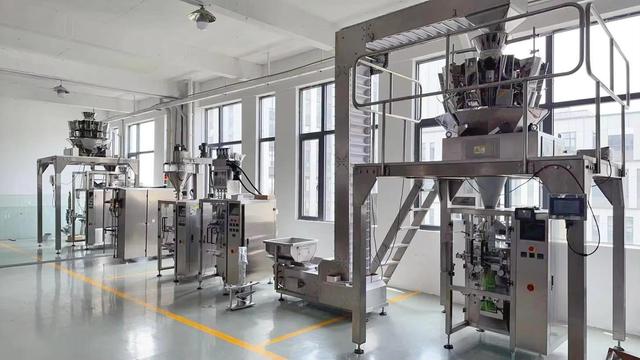
Thailand's diverse manufacturing sectors present distinct challenges for packaging systems. A cookie processing line in Pathum Thani has different requirements than a tropical fruit packhouse in Chanthaburi or a frozen chicken processing plant in Nakhon Ratchasima. Here is how horizontal packaging machines are adapted for these unique local conditions:
Thailand’s domestic market has a strong demand for individual snacks and convenient bakery products. To keep items fresh in high humidity, flow wrappers must apply gas-flushing (nitrogen gas purging) to reduce oxygen below 1%. High-speed machines utilize rotary sealing jaws with heat-resistant coatings to prevent plastic from melting on the seal, ensuring a secure airtight seal for distribution.
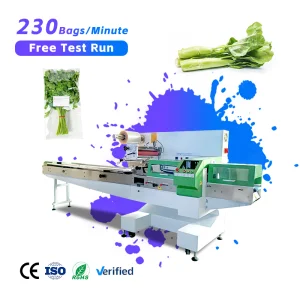
Exporting frozen chicken or fresh tropical vegetables requires packaging that handles damp environments and prevents product contamination. For these sectors, JSG recommends full SUS304 stainless steel construction with IP65-rated control boxes. This design allows for daily washdowns with high-pressure water and cleaning agents without damaging internal electronic systems.
Drawing on our deep experience as global machinery manufacturers, we address common questions from procurement managers and engineers in Thailand.
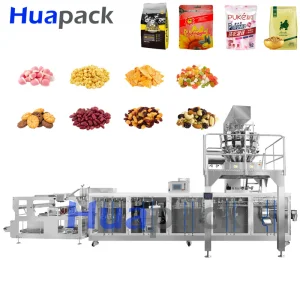
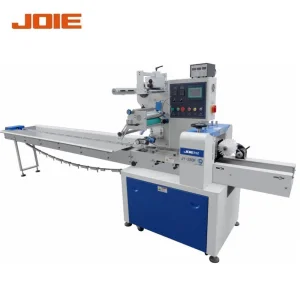
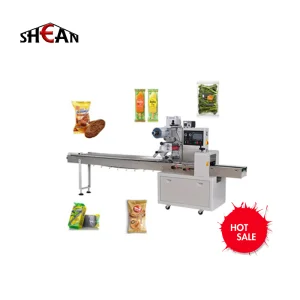
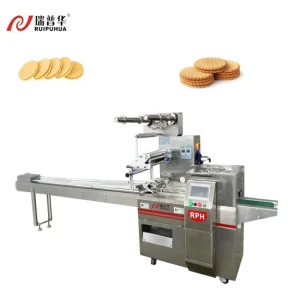
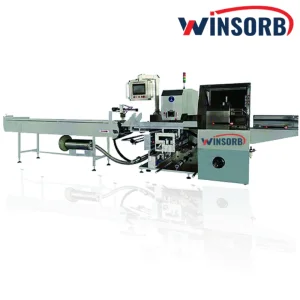
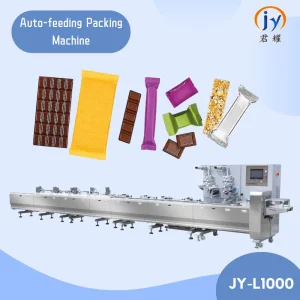
From entry-level pillow packaging machines to advanced servo-driven, high-speed flow wrapping systems. Select a model below to match your product geometry and throughput targets.
 JSG Machinery