Explore our elite range of CE-certified weighing, filling, labeling, and automated cartooning machines tailored for performance optimization.
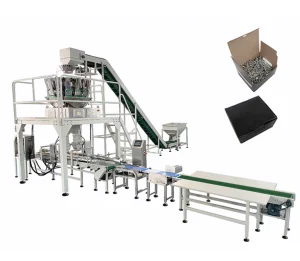
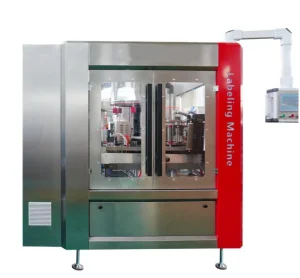
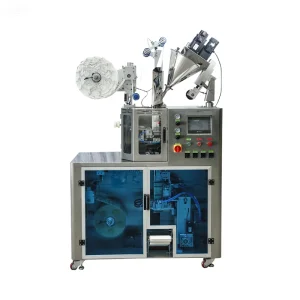
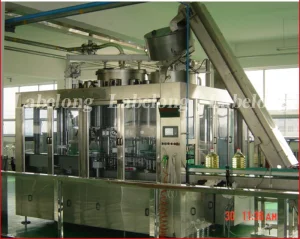
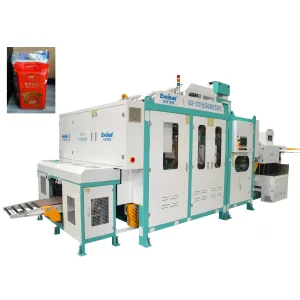

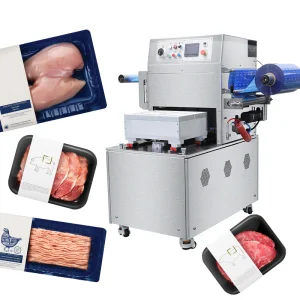
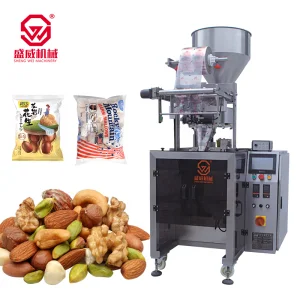
In the contemporary manufacturing landscape, the convergence of automated packing lines and metrological accuracy has ceased to be a simple operational option—it has evolved into a strategic baseline for survival. Integrated Weighing Systems represent the central nervous system of modern industrial packaging. Defined by their capacity to coordinate material dosing, real-time mass calculation, dynamic packaging, and quality-rejection parameters in a unified automated framework, these systems determine the OEE (Overall Equipment Effectiveness) margins of enterprises globally. From micro-dosage powder dosing in pharmaceutical cleanrooms to high-velocity bulk packaging of agricultural commodities, the precision constraints remain absolute.
As raw material costs escalate and global regulatory regimes impose strict limits on product giveaways, the demand for highly precise, CE-certified systems has surged. System integration must achieve a seamless data-loop: from the load-cell sensor's localized voltage differential to the overarching ERP system (such as SAP or Oracle). This structural whitepaper analyzes the current commercial paradigm of integrated weighing systems, the architectural efficiencies of Chinese manufacturing centers, localized deployment vectors, and future-forward technological paradigms.
Globally, the market for packaging and weighing automation is undergoing an unprecedented structural transition. Production units are transitioning away from disconnected, standalone mechanical scales toward complex, integrated systems capable of multi-channel sensor synchronization. In mature economies, such as North America and the European Union, the primary drivers are regulatory compliance (such as the EU's Measuring Instruments Directive - MID and local Weights & Measures regulations) and the severe scarcity of industrial labor. Consequently, the commercial imperative focuses heavily on total operational transparency, fail-safe quality checks, and ultra-high-speed material dispensing.
Conversely, emerging manufacturing hubs are deploying integrated weighing installations to scale production speed while minimizing human-error waste. Multihead weighers, linear dosing systems, and liquid filling lines are now expected to execute thousands of measurements per hour with standard deviations under a fraction of a gram. Industry 4.0 integration, specifically utilizing communication protocols like Profinet, EtherCAT, and Modbus TCP, allows modern factories to minimize downtimes and perform predictive maintenance on strain gauge and electromagnetic force restoration (EMFR) load cells.
Discover why JSG Machinery sets the global benchmark for automation systems engineering.
Fully compliant with EU safety, health, and environmental protection requirements, guaranteeing seamless cross-border implementation.
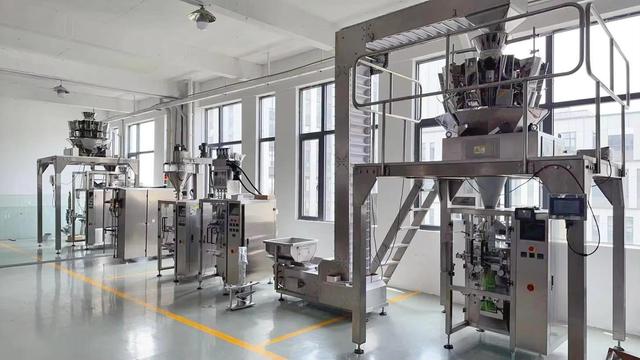
Real-time digital signal processing (DSP) algorithms enable multi-head scales to compute optimal weight combinations within milliseconds.
IP65/IP69K sanitary ratings with tool-less dismantle structures for simplified cleaning, sanitization, and maintenance.
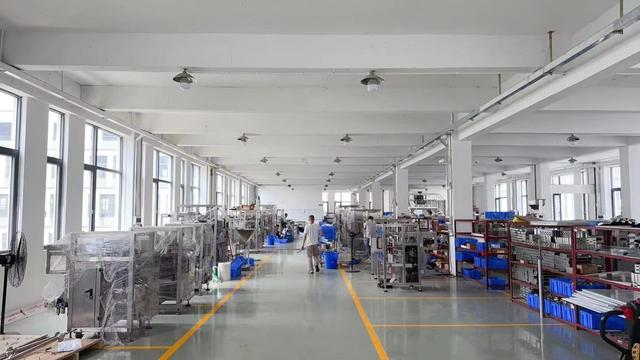
Centering production in Dongguan, Guangdong Province—frequently dubbed the world's manufacturing capital—allows Dongguan JSG Machinery Co., Ltd. to leverage unparalleled industrial ecosystems. The efficiency of a manufacturing plant is not dictated solely by its internal tooling, but by the density of its regional supply chain. Within a 50-kilometer radius of our 20,000-square-meter facility, we access specialized surface treatments, premium non-corrosive stainless steels (SUS304 and SUS316L), state-of-the-art electronics, and advanced CNC machining centers. This proximity dramatically compresses our production cycles and product engineering lead times.
China's factory efficiency is further bolstered by a deep pool of skilled automation and software engineers. The capacity to build customized vertical cartooning systems or non-standard screw carton packers relies heavily on fast design iteration. Unlike Western equipment manufacturers who face long lead times for custom machined casting components, Chinese manufacturers can design, prototype, mill, and test a customized component within days. This operational agility means international buyers obtain not only a more cost-effective machine, but a system delivered weeks ahead of local competitors, resulting in accelerated capital-to-asset conversion.
To realize the optimal performance of integrated weighing technology, configurations must be customized for specific material dynamics and site environments. JSG Machinery specializes in adapting its machinery to diverse localized applications:
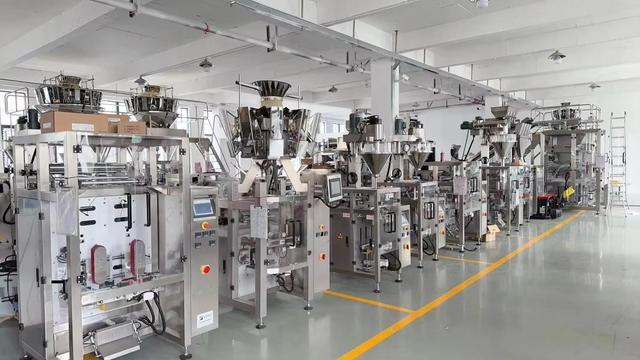
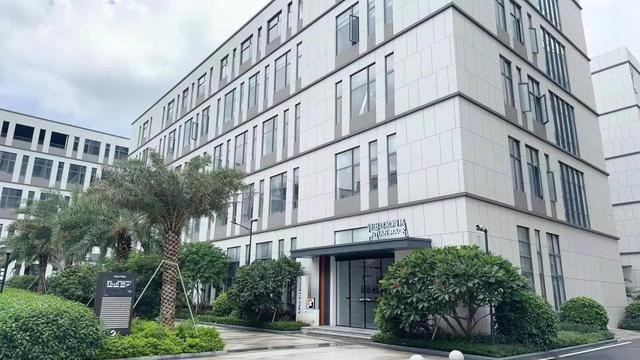
Founded in 2010 in Dongguan, Guangdong, Dongguan JSG Machinery Co., Ltd. has grown from a specialized tooling workshop to an industry-leading packaging systems manufacturer. With over 220 professionals, a modern 20,000 m² assembly plant, and direct distribution lines across North America, Europe, Southeast Asia, and the Middle East, we combine industrial-scale output with bespoke custom engineering. From initial plant layout planning in CAD to software integration via Modbus/TCP, our system designs optimize every step of your packaging line.
When procurement departments source large-scale capital assets, evaluating total cost of ownership (TCO) is crucial. System compatibility, compliance certifications, and maintenance schedules must align with organizational standards. A primary requirement for international procurement is compliance. CE certification is mandatory for European operations; it serves as a baseline proof of mechanical safety, electrical shielding, and low-voltage electrical protection. Additionally, machinery must comply with food contact regulations, such as FDA directives, using food-grade plastics and polished stainless steel to prevent bacterial growth.
A second major consideration is system modularity. In modern factories, production lines must change configurations quickly to package different products. Equipment engineered with tool-less disassembly, standardized electronics, and recipe-based PLC interfaces allows quick adjustments, reducing swap times from hours to minutes. Finally, buyers should verify the supplier's capacity to deliver comprehensive FAT (Factory Acceptance Testing) and SAT (Site Acceptance Testing) protocols, along with remote diagnostic access via secure VPNs, ensuring immediate engineering support from the supplier's experts regardless of distance.
Looking ahead, the integration of Artificial Intelligence (AI) and Machine Learning (ML) into weighing software marks the next major evolutionary step. Traditional weighing controllers rely on proportional-integral-derivative (PID) feedback loop adjustments to correct for variations in material flow. However, AI-driven weighing algorithms can analyze historical sensor data to predict how environmental changes—like shifting factory humidity or variations in product density—will affect flow rates. By preemptively adjustments feed tray vibrations, these systems virtually eliminate out-of-tolerance rejects.
Furthermore, cloud-based diagnostic telemetry is changing how maintenance is managed. Instead of following fixed schedules, load cells and servo drives can monitor their own wear levels. Real-time vibration, temperature, and electrical load metrics are logged, alerting operators when a component is nearing failure. This transition to predictive maintenance minimizes unscheduled downtime, protecting your production line from unexpected interruptions.
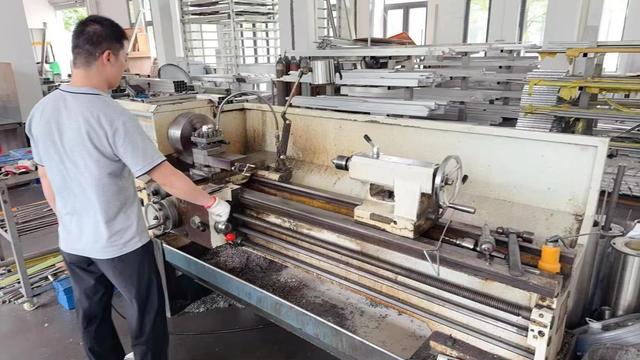
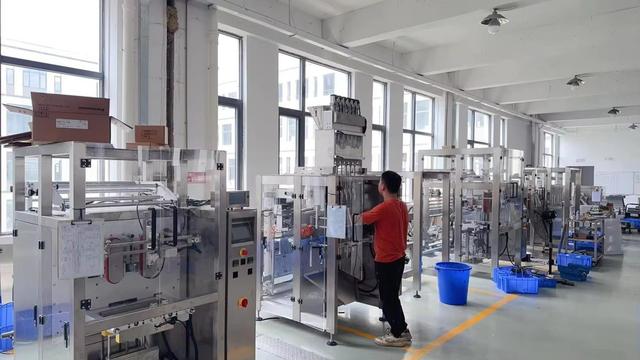
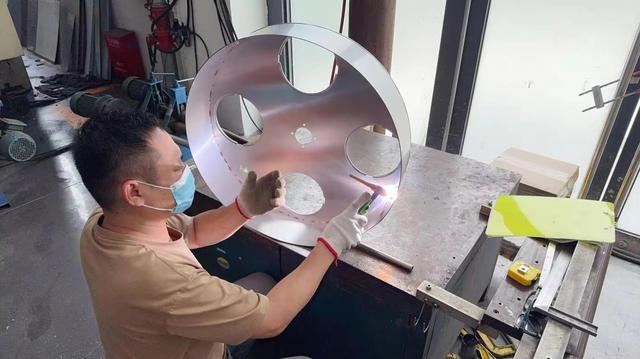
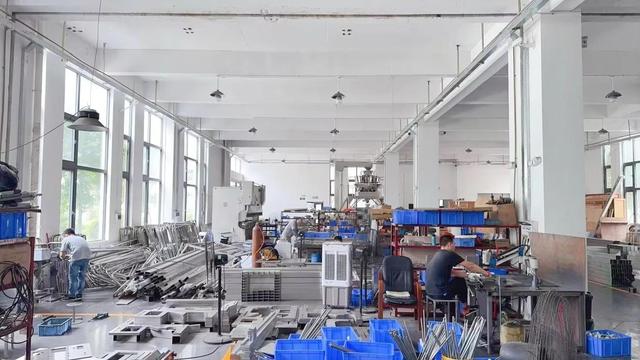
Take a virtual tour through our advanced manufacturing, quality control testing, and precision CNC engineering facilities in Dongguan.

Technical answers to essential engineering and integration questions regarding our weighing systems.
We utilize precision strain gauge load cells and electromagnetic force restoration (EMFR) systems sourced from globally recognized metrology partners. These sensors are coupled with high-speed 24-bit A/D converters to ensure rapid signal response times and high resolution, delivering accurate measurements even under high operating speeds.
Every weighing and packaging line manufactured in our facility is designed to comply with EU safety guidelines. This includes incorporating complete electromagnetic shielding, safety interlocking switches on protective enclosures, certified low-voltage control panels, and rigorous structural analysis to prevent mechanical failure during operation.
Yes, all of our PLC control networks are built on open industrial communication protocols. We support direct integration via Modbus TCP, EtherNet/IP, and Profinet, allowing real-time transmission of batch data, weight stats, checkweigher metrics, and OEE indicators to your central MES or ERP system.
We supply systems with IP65, IP67, and IP69K ingress protection ratings. For corrosive chemical dosing or high-pressure washdowns, we manufacture structural frames, collection bins, and load cell enclosures entirely from premium SUS316L stainless steel, coupled with hermetically sealed electronics.
Our engineering division manages customized systems through a structured process: initial CAD modeling based on your specific samples, design optimization to fit your factory layout, and comprehensive testing in our facility. We also provide live video inspections before dispatching the systems.
Integrate our high-accuracy packaging and downstream automation machinery to complete your smart production facility.
 JSG Machinery