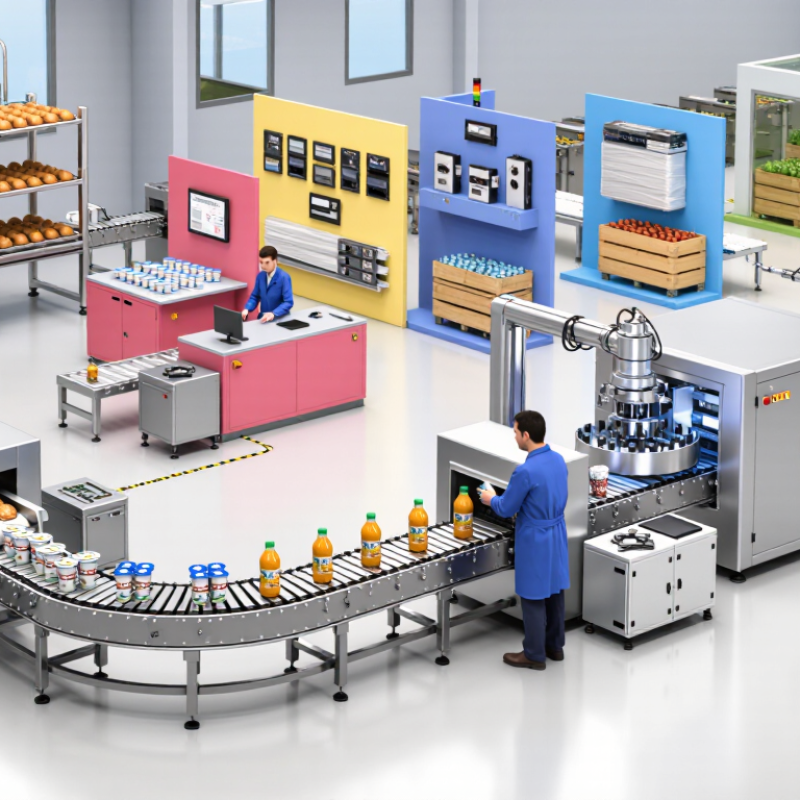
What industries use packaging machinery? The answer reaches far beyond factory floors. Food and beverage plants use fillers, sealers, and labelers to move products such as yogurt cups, bottled juice, and frozen meals through controlled production lines. Pharmaceutical manufacturers rely on precise counting, filling, and inspection equipment. Cosmetics, household goods, electronics, and agricultural businesses also use machinery to protect products and prepare them for shipping.
The right system depends on the product, container, production speed, and available floor space. A small bakery may need a compact flow wrapper; a beverage plant may run high-speed bottling lines. Packaging Machinery Manufacturers Institute (PMMI) president and CEO Jim Pittas is an experienced industry voice. A practical paraphrase of the industry perspective he represents is: “Packaging machinery works best when it fits the product, process, and pace of the operation.” This is a summary, not a verbatim quotation.
That fit is not always obvious. A machine built for rigid bottles may struggle with soft pouches, and faster output can create new inspection or changeover demands. Real production lines have limits. Understanding the industries that use packaging machinery means looking at both the equipment and the daily work around it: operators changing rolls, technicians checking seals, and teams adjusting settings when materials vary. This guide explores common sectors, typical machines, and the practical factors behind equipment choices. Some needs overlap. That is worth remembering.
What Industries Use Packaging Machinery?
Food and Beverage: WHO Estimates 600 Million Foodborne Illnesses Yearly
The World Health Organization’s 2015 report, Estimates of the Global Burden of Foodborne Diseases, estimated 600 million illnesses and 420,000 deaths worldwide each year. Food and beverage plants face a practical challenge: keeping products safe from processing through sealing. Packaging machinery can reduce unnecessary product handling, but it cannot make contaminated ingredients safe. Clean equipment, controlled filling, and intact seals all matter.
A loose cap on a chilled drink or a torn pouch on a conveyor can expose food after processing. Small failures count. The World Bank’s 2018 report, The Safe Food Imperative, estimated that unsafe food costs low- and middle-income economies US$110 billion annually in productivity losses and medical expenses. Automation may improve consistency, yet it is easy to overrate what a machine can fix. Staff still need to inspect contact surfaces, monitor seals, and respond to faults.
Tips: Check seal integrity during production, not just at shift start. Record cleaning and maintenance checks, and investigate recurring leaks. A fast line is not necessarily a safe line.
IQVIA reported that 6.7 billion prescriptions were filled in the United States in 2022. Each prescription may require a package that protects the medicine and carries clear, readable information. At this scale, even routine packaging tasks become a substantial part of pharmaceutical operations. That is a striking volume.
Packaging machinery can fill containers, apply closures, print labels, and verify that packs are complete. A line may handle small bottles, blister cards, or cartons, depending on the product. Sensors and in-line checks can help identify missing units or unreadable codes before packages move onward. Small errors matter. A misplaced label or loose cap can create delays and extra inspection work.
The prescription figure shows demand, but it does not reveal every packaging challenge. Medicines differ in shape, handling needs, and package design, so equipment must be set up for the product and checked during production. Staff still need to monitor changeovers, material supply, and quality records. It is easy to focus on speed; that can make the process look simpler than it is. A fast line is useful only when each package remains accurate, traceable, and ready for dispensing.
Cefic reported global chemical-industry sales of €5.0 trillion in 2023, reflecting the scale and variety of products moving through manufacturing supply chains. Packaging machinery helps turn that output into measured, sealed, and identifiable goods. The equipment may handle liquids, powders, granules, or pastes, each with different flow and handling needs.
A liquid-filling line, for example, may use pumps and nozzles designed to limit drips and keep fill levels consistent. Powder systems often need enclosed transfer points to reduce dust around operators and equipment. Containers may then be capped, labeled, inspected, and grouped for shipment. Small details matter. A poorly matched seal or a label placed over a seam can create avoidable rework.
Chemical packaging lines also require careful material selection. Contact surfaces must suit the product, while sensors and weighing systems help operators monitor filling accuracy. Batch records and readable labels support routine quality checks. Yet more automation is not always better; frequent product changes can make a complex line harder to clean and adjust. That trade-off deserves a practical review, not just a speed target.
| What Industries Use Packaging Machinery? — Chemicals: Global Sales Reached €5.0 Trillion in 2023 (Cefic) | |||
|---|---|---|---|
| Chemical Industry Segment | Common Products | Typical Packaging Formats | Packaging Machinery Commonly Used |
| Basic chemicals | Acids, alkalis, solvents, and other high-volume chemical products | Drums, jerrycans, intermediate bulk containers (IBCs), and bulk containers | Liquid filling systems, drum and IBC filling lines, capping or closure systems, and labelers |
| Specialty chemicals | Adhesives, sealants, additives, and treatment chemicals | Bottles, cartridges, pails, tubes, and small containers | Volumetric or weight-based fillers, cartridge filling machines, tube fillers, and capping equipment |
| Agrochemicals | Crop-protection products, fertilizers, and seed-treatment products | Bottles, bags, sacks, and bulk containers | Liquid and powder fillers, bagging machines, cap applicators, and labelers |
| Paints and coatings | Paints, varnishes, coatings, and related products | Cans, pails, drums, and cartridges | Can and pail filling systems, lid placing and closing machines, and product labeling equipment |
| Industrial gases | Compressed and liquefied gases supplied for industrial and commercial use | Pressurized cylinders and other approved pressure vessels | Cylinder filling, weighing, valve-handling, and inspection systems designed for the relevant gas and container |
| Polymers and resins | Plastic resins, polymer pellets, and resin powders | Bags, bulk bags, boxes, and bulk containers | Weighing and dosing systems, bagging machines, bulk-bag fillers, and case or pallet handling equipment |
| Industry context: Cefic reported global chemical sales of €5.0 trillion in 2023. Packaging formats and machinery vary by product properties, container requirements, and applicable safety regulations. | |||
The U.S. Census Bureau estimated that online retail sales reached $1.19 trillion in 2024. That scale turns packaging into a daily operational challenge. Orders arrive in different combinations: a small book, a glass jar, or several items needing separate cushioning. Packaging machinery helps teams form cartons, fill voids, seal boxes, and apply shipping labels at a steady pace. A busy fulfillment line may process many box sizes in one shift. Every handoff matters.
The right equipment depends on order patterns, product fragility, and available floor space. A carton erector can keep boxes ready, while adjustable sealing equipment handles changing dimensions. Sensors and routine checks help catch crooked labels or poorly closed flaps before parcels leave the facility. Small details count. Yet automation is not always the answer. A machine set for one carton size may create excess packaging when orders vary. That is a real trade-off, and it deserves review. Teams can track damaged shipments, packing time, and material use, then adjust equipment settings or workflows. The Census figure shows the market’s scale; the practical lesson is more specific: packaging systems should fit the parcels actually moving through the operation.
Beauty and personal care generated $446 billion in global sales in 2023, according to Euromonitor. That scale makes packaging machinery a practical part of the sector’s daily work, not just a factory investment. Lotions, shampoos, creams, and fragrances require different filling and closing processes. A production line may handle pumps, tubes, jars, or slim bottles, each needing accurate dosing and careful handling. Small errors show quickly: a crooked cap or product smudge can make a shelf-ready item look careless. Details matter. No line is universal.
Manufacturers use filling, capping, labeling, and inspection equipment to keep output consistent as product ranges expand. Flexible changeovers help when container sizes or formulas shift. Gentle conveying can protect lightweight bottles and decorated surfaces. Automation reduces repetitive handling, but it still requires trained operators, cleaning routines, and checks for fill levels and seal quality. Sales figures do not reveal exactly how much machinery was purchased; they show market scale, not a direct equipment forecast. That distinction is easy to overlook. Packaging choices also affect material use, shipping weight, and the customer’s first impression. Equipment decisions involve trade-offs, not one perfect solution.
It can reduce unnecessary handling during filling and sealing. Clean equipment and intact seals still matter. Machines cannot fix contaminated ingredients.
Inspect contact surfaces, fill levels, and seals throughout the shift. Record cleaning and maintenance checks. A fast line is not always a safe line.
Online retail sales reached $1.19 trillion in the United States in 2024. Orders vary, from small books to fragile glass jars. Every handoff matters.
Carton erectors keep boxes ready, while adjustable sealers handle different dimensions. Check labels and box flaps before parcels leave. Small details count.
Lotions, shampoos, creams, and fragrances use different containers and closing methods. Lines may need fillers, cappers, labelers, and inspection equipment. No line is universal.
Gentle conveying can help protect lightweight bottles and decorated surfaces. Operators should also check fill levels and seal quality. A crooked cap shows.
Not exactly. Beauty and personal care sales reached $446 billion globally in 2023, but that figure is not an equipment forecast. Easy to confuse.
Track damaged shipments, packing time, and material use. Review recurring leaks or excess packaging. I may be oversimplifying, but the real parcel mix matters.
What industries use packaging machinery? The answer spans nearly every sector that makes, protects, or ships products. In food and beverage, machinery helps fill, seal, and label goods while supporting hygiene and efficient production—a vital role given the estimated 600 million foodborne illnesses worldwide each year. Pharmaceutical packaging supports accurate handling of medicines, with 6.7 billion prescriptions filled in the United States in 2022. Chemical manufacturers also rely on suitable systems to package products safely and consistently; global chemical sales reached €5.0 trillion in 2023.
Demand also comes from fast-growing consumer markets. E-commerce packaging machinery can prepare products for storage and delivery as U.S. online sales reached $1.19 trillion in 2024. Beauty and personal care producers use packaging equipment to fill and finish items in varied formats, serving a global market valued at $446 billion in 2023. Across these industries, machinery improves speed, consistency, product protection, and readiness for distribution.

JSG Machinery