Packaging machinery is no longer limited to filling, sealing, or labeling products. It now coordinates speed, quality, safety, and data across the production line. So, how does packaging machinery improve production efficiency? The answer appears in measurable details: shorter changeovers, steadier conveyor movement, fewer product jams, and more consistent sealing pressure.
Jim Pittas, President and CEO of PMMI, has expressed a practical view of automation: “Automation is not about replacing people; it is about augmenting people.” That principle matters on a busy packaging floor. A machine can repeat precise movements for eight hours, while operators focus on inspections, adjustments, and problem-solving. Sensors can detect an empty carton or abnormal torque before a small fault becomes a long shutdown. Digital counters can also reveal where production time disappears.
The gains are visible.
Modern equipment may support higher output, lower material waste, and stronger batch traceability. Automatic format changes can reduce the minutes lost between products. Servo-driven systems can improve timing, especially when packages move quickly through multiple stations. Predictive maintenance tools may identify vibration or temperature changes before equipment fails.
Yet efficiency is not automatic. A poorly integrated machine can create new bottlenecks. Staff still need training, cleaning procedures, and realistic maintenance schedules. That limitation matters. The best results come from matching machinery to product behavior, workforce skills, floor space, and verified production data.
This article examines ten practical ways packaging machinery improves efficiency, while recognizing an uncomfortable truth: faster equipment does not always mean better production.
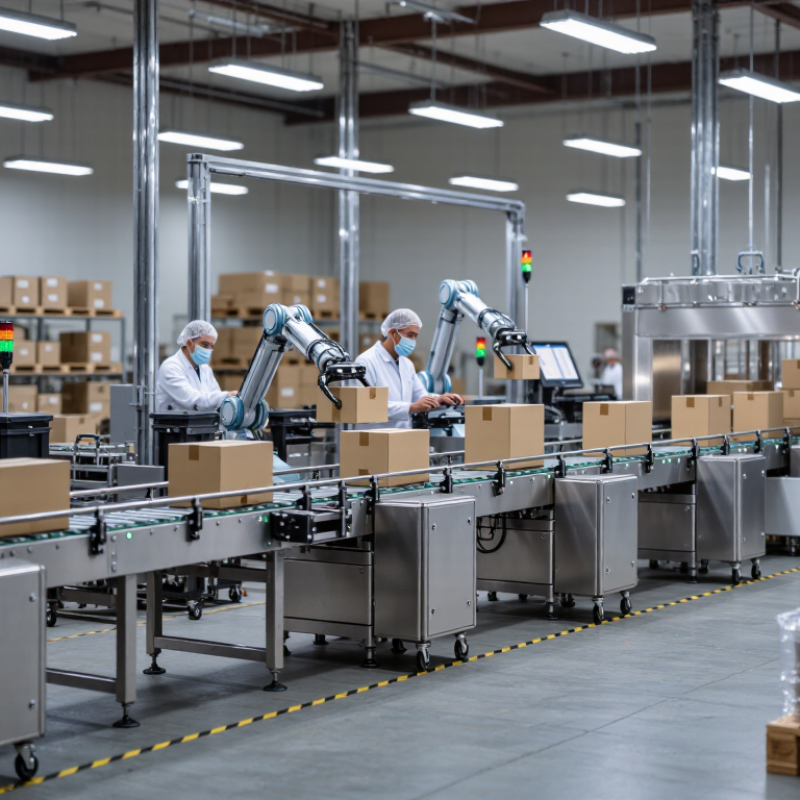
Packaging machinery covers equipment that fills, seals, labels, inspects, packs, and palletizes products.
Its scope reaches food, beverages, pharmaceuticals, chemicals, and consumer goods. A modern line may connect conveyors, sensors, vision systems, robotic arms, and production software. This integration makes machinery more than a faster replacement for manual work. It creates a controlled production environment with measurable speed, waste, safety, and traceability.
The International Federation of Robotics reported 541,302 industrial robots installed worldwide in 2023, a 10% annual increase.
Packaging operations contribute to this wider automation movement. Automated fillers can maintain consistent volumes, while checkweighers identify errors before shipment. Case packers also reduce repetitive lifting and support steadier output during labor shortages. From practical line reviews, the largest gains often come from shorter changeovers, not maximum machine speed. A poorly designed setup can simply produce mistakes faster. That part deserves more attention.
Tips:
Measure overall equipment effectiveness before buying equipment. Record stoppage reasons, changeover minutes, rejected units, and cleaning time. Select machines with accessible components and clear operator controls. Test real products, packaging materials, and difficult formats before approval. PMMI industry research repeatedly identifies labor challenges, productivity pressure, and flexible automation as major investment drivers. However, reports cannot replace factory trials. Dust, humidity, uneven materials, and rushed operators may expose weaknesses that appear invisible on paper.
Automated material handling turns scattered movements into a controlled flow. Conveyors, robotic palletizers, and guided vehicles can move cartons between filling, sealing, inspection, and storage areas. Sensors also detect gaps, fallen packages, and blocked lanes before minor faults become long stoppages.
Small delays matter.
A five-second interruption, repeated hundreds of times, can reduce daily output significantly.
The International Federation of Robotics reported 541,302 industrial robots installed worldwide in 2023, a 10% increase from 2022.
Deloitte’s 2024 Smart Manufacturing and Operations Survey found that 86% of manufacturers expect smart manufacturing to become a major competitiveness factor within five years.
This growth reflects wider confidence in repetitive automation, including packaging operations. In practice, synchronized equipment can shorten transfer time and keep production data visible. Operators can adjust buffer levels, detect speed losses, and coordinate upstream and downstream machines more accurately. Faster workflows also support steadier changeovers when recipes, formats, or pack sizes change.
Automation is not magic. A poorly tuned conveyor can waste more time than it saves. Material routes must match real floor conditions, including walking distances, pallet traffic, and cleaning access. Teams should measure line speed, unplanned downtime, changeover duration, and manual touches before installation. That baseline exposes improvement honestly. It also prevents attractive technology from hiding weak planning, poor training, or oversized buffers. Reliability grows when operators can safely intervene and maintenance teams receive clear fault signals.
Modern packaging machinery improves efficiency through controlled filling, reliable sealing, accurate labeling, and continuous quality checks. Servo-driven fillers deliver consistent volumes, even when products flow differently. A stable fill reduces waste and prevents costly rework. Small errors matter.
Sealing stations apply measured pressure and heat across every package. Sensors can detect weak seals, wrinkles, or missing closures before products leave the line. Labeling systems also improve speed by placing labels at repeatable positions. Clear codes support traceability and help operators identify production batches quickly. In practice, correct setup matters as much as automation. A poorly adjusted machine can repeat the same mistake thousands of times.
Quality control becomes stronger when checkweighers, vision sensors, and reject mechanisms work together. They can identify underfilled packs, damaged seals, crooked labels, and unreadable markings. Operators should still inspect samples and review production data. No line is perfect. Sensors may drift, film may change, and cleaning can disturb calibration. Regular verification keeps performance dependable. One overlooked weakness is changeover time; poorly planned adjustments can erase efficiency gains. Experienced teams record settings, examine defects, and refine each run instead of trusting equipment blindly.
Top 10 Ways Packaging Machinery Improves Efficiency
Modern packaging machinery reduces waste by controlling fill volumes, sealing pressure, and cutting accuracy. Small errors become expensive across thousands of units. Automated inspection can identify weak seals, crooked labels, and damaged cartons before shipment. This protects materials and improves customer trust. It also reduces repetitive labor demands. Operators can supervise several process stages instead of performing every manual movement. Safer workflows matter too. Less lifting and reaching can reduce fatigue during long shifts.
Downtime often falls when machines record stoppages and identify recurring faults. Preventive maintenance, including sensor cleaning and belt checks, keeps production more stable. Faster changeovers also reduce idle minutes between product runs. However, automation is not a magic solution. A poorly calibrated sensor may create waste faster than a person. Energy use, training time, and spare parts can also increase operating costs. Reliable results require measurement, not assumptions. Track material loss, labor hours, unplanned stops, and output per shift.
Tips: Set realistic efficiency targets before installation. Measure the same indicators afterward. Keep a simple maintenance log with dates, fault types, and repairs. Train operators to notice loose seals, unusual noise, and inconsistent feeding. Small adjustments often prevent costly stoppages. Do not ignore manual feedback. Operators may notice problems before software does. Test packaging materials during actual production conditions, because laboratory results can be misleading. Review the data monthly, and question improvements that cannot be verified.
| No. | Efficiency Improvement | Primary Metric | Typical Measurable Effect | How It Improves Operations | Recommended Measurement Method |
|---|---|---|---|---|---|
| 1 | Automatic Filling and Weighing | Product Overfill | 10–30% reduction | Closed-loop scales and automatic dosing reduce excessive product in each package while maintaining target weights. | Compare average giveaway per package before and after automation using verified scale data. |
| 2 | Automated Case Packing | Direct Labor Hours per Case | 20–50% reduction | Robotic or automatic packing reduces repetitive manual loading, counting, and case-forming activities. | Track labor hours divided by the number of cases produced during comparable production periods. |
| 3 | Integrated Conveying and Line Handling | Micro-Stoppage Frequency | 10–25% reduction | Coordinated conveyors and buffering systems help maintain product flow between filling, labeling, packing, and palletizing stages. | Record the number and total duration of stops shorter than five minutes by production shift. |
| 4 | Quick-Change Tooling and Digital Recipes | Changeover Time | 30–60% reduction | Preset tooling, guided adjustments, and stored machine recipes reduce setup work between products or package formats. | Measure the time from the final good unit of one run to the first good unit of the next run. |
| 5 | Predictive Maintenance and Condition Monitoring | Unplanned Downtime | 10–30% reduction | Vibration, temperature, current, and cycle-count data can identify developing faults before they cause major failures. | Compare emergency downtime hours and maintenance work orders over equivalent operating periods. |
| 6 | Inline Vision Inspection | Defect and Rework Rate | 20–50% reduction | Camera-based inspection detects missing components, incorrect labels, seal defects, and damaged packages during production. | Calculate rejected or reworked units as a percentage of total units produced. |
| 7 | Real-Time OEE and Production Monitoring | Overall Equipment Effectiveness | 5–15% relative improvement | Live data makes losses from availability, performance, and quality visible so supervisors can act quickly. | Calculate OEE as Availability × Performance × Quality and compare results by line and shift. |
| 8 | Automatic Sealing and Film-Tension Control | Packaging Material Scrap | 5–20% reduction | Consistent temperature, pressure, alignment, and film tension reduce mis-seals, wrinkles, trim waste, and rejected packs. | Measure the weight or length of discarded packaging material per production run. |
| 9 | Robotic Palletizing and Depalletizing | Manual Material-Handling Labor | 30–70% reduction | Robots perform repetitive lifting and stacking tasks consistently, allowing employees to focus on supervision and value-added work. | Compare labor hours assigned to palletizing activities per pallet shipped. |
| 10 | Energy-Efficient Drives and Automatic Idle Modes | Energy Consumption per Packed Unit | 10–25% reduction | Variable-speed drives, efficient motors, and automatic standby settings reduce electricity use during production and idle periods. | Track electricity usage in kWh and divide it by the number of saleable units produced. |
Note: The improvement ranges are typical operational benchmark ranges for comparable packaging processes. Actual results depend on product characteristics, line speed, equipment condition, staffing, maintenance practices, changeover frequency, and baseline performance.
Safety, Data Integration, Flexibility, and Long-Term Efficiency Gains
Modern packaging machinery improves efficiency through safer operation, faster changeovers, and clearer production data. Guarding, interlocks, emergency stops, and ergonomic loading reduce avoidable exposure to moving parts. The U.S. Bureau of Labor Statistics recorded 2.7 nonfatal injury and illness cases per 100 full-time manufacturing workers in 2023. Better machine design cannot remove every risk. It can make unsafe actions harder to repeat.
Integrated sensors capture speed, downtime, rejects, temperature, and maintenance conditions. Operators can view performance on one dashboard instead of comparing handwritten notes. A 2024 smart-manufacturing survey found that 86% of manufacturers considered digital operations important for future competitiveness. Data only helps when teams trust its accuracy. A connected line can still produce bad decisions.
Flexible equipment supports multiple formats, recipes, and batch sizes. Tool-free adjustments and recipe controls can shorten changeovers, especially during frequent product variations. Predictive alerts also help maintenance teams replace worn parts before a sudden stoppage. These gains accumulate through lower waste, steadier output, and improved energy control. The investment is not automatically efficient. Poor training, weak data standards, or excessive automation can create new delays. Practical trials, documented procedures, and regular safety reviews keep long-term efficiency grounded in daily production.
It includes equipment for filling, sealing, labeling, inspecting, packing, and palletizing products. It can also connect conveyors, sensors, vision systems, robotic arms, and production software.
Food, beverages, pharmaceuticals, chemicals, and consumer goods commonly use these systems. The equipment must match each product, container, material, and production condition.
It controls fill volumes, sealing pressure, and cutting accuracy. Inspection systems can detect weak seals, damaged cartons, and crooked labels. Small errors matter.
Yes. Operators can supervise several stages instead of repeating every manual movement. This may reduce lifting, reaching, and fatigue during long shifts. Human oversight remains necessary.
Machines can record stoppages and reveal recurring faults. Preventive maintenance includes cleaning sensors, checking belts, and replacing worn parts. A basic maintenance log helps identify patterns.
Shorter changeovers reduce idle minutes between product runs. They may improve output more effectively than higher maximum speed. Fast is not always better.
Measure overall equipment effectiveness, stoppage reasons, changeover minutes, rejected units, and cleaning time. Also record labor hours, material loss, and output per shift.
Test real products, packaging materials, and difficult formats in actual production conditions. Check dust, humidity, uneven materials, and rushed operation. Paper results can mislead.
Operators should learn clear controls, safe workflows, routine cleaning, and basic fault recognition. They should notice loose seals, unusual noise, and inconsistent feeding. Their feedback may arrive first.
Yes. Energy use, training time, spare parts, and poor calibration can raise operating costs. Automation is not a magic solution. Measure verified results monthly, and question improvements that lack evidence.
Packaging machinery plays a vital role in modern production by automating the movement, preparation, and packing of products. It helps businesses create faster, more organized workflows while supporting consistent output. Automated systems can handle materials efficiently, reduce manual transfers, and coordinate filling, sealing, labeling, and inspection processes with greater precision. This improves product presentation and helps maintain reliable quality standards throughout production.
A key question is: how does packaging machinery improve production efficiency? It reduces material waste, minimizes labor demands, limits production interruptions, and lowers operating costs over time. Advanced equipment can also improve workplace safety by reducing repetitive or hazardous manual tasks. When connected with digital monitoring and data systems, packaging machinery provides useful performance information for maintenance and process improvements. Its flexibility allows manufacturers to adapt to different product sizes, packaging formats, and production volumes, creating long-term efficiency gains while supporting more stable and dependable operations.

JSG Machinery