Integrating packaging equipment is rarely a matter of placing machines in a straight line. It is a production design decision involving speed, product flow, safety, data, people, and maintenance. This guide explores how to integrate packaging machinery into production lines without creating hidden bottlenecks between filling, labeling, inspection, case packing, and palletizing.
Mike Ferrari, a former Procter & Gamble packaging executive and founder of Ferrari Innovation Solutions, often explains the central challenge this way: “Packaging is a system, not a single machine.” That principle matters on the factory floor. A fast cartoner cannot compensate for an unreliable conveyor. A modern vision system cannot repair poor product spacing. Small timing errors can become damaged cartons, repeated stoppages, and wasted materials.
The seven approaches in this outline focus on practical integration. They include mapping the complete process, defining compatible speeds, selecting suitable controls, connecting machine data, planning changeovers, protecting operators, and validating performance before full-scale production. Each step needs evidence from real operating conditions, not only supplier brochures. Measure cycle times. Test different package sizes. Watch where operators reach, wait, or improvise.
Perfect integration is unrealistic.
Even experienced teams miss something.
A line may pass factory acceptance testing and still struggle during a humid morning shift. That possibility deserves attention, not embarrassment. The strongest projects leave room for adjustment, training, and honest review. They also document assumptions, assign ownership, and set measurable targets for uptime, quality, waste, and changeover time. This practical foundation helps manufacturers build packaging lines that perform consistently, remain serviceable, and adapt when products or volumes change.
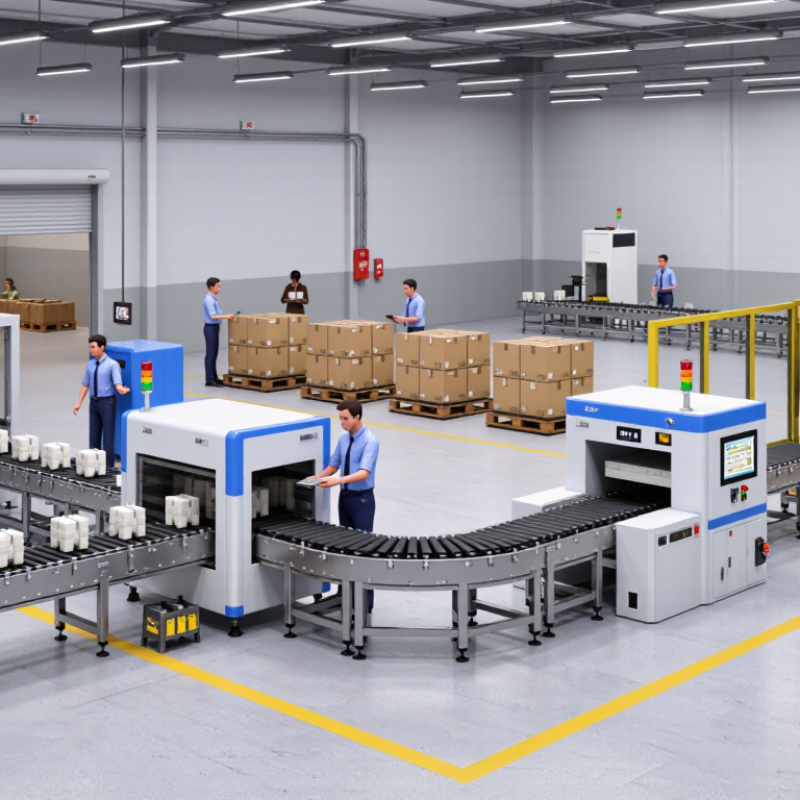
7 Best Ways to Integrate Packaging Machinery
Assess Product, Packaging, and Production Line Requirements
Successful packaging machinery integration begins with the product itself. Record its size, weight, shape, temperature, texture, and sensitivity to movement. A fragile item may need gentle handling, while a dusty product can affect sealing and sensors. Review the packaging material too. Film thickness, carton strength, and label position can change machine performance. In practice, our first layout was too optimistic because it ignored product variation.
Study the complete production line, not only one machine. Measure conveyor height, available floor space, utility points, operator access, and maintenance clearance. Confirm the required speed, changeover time, filling accuracy, and inspection steps. Check how upstream and downstream equipment exchange signals. A fast machine is not useful if the conveyor creates backups. Safety guarding, emergency access, and sanitation requirements must also be assessed before purchasing equipment.
Tips: Test real products and packaging samples whenever possible. Measure the largest and smallest formats. Allow room for tools and cleaning. Ask operators to review the layout; they notice practical problems engineers may miss. Keep written records of trial settings, defects, and adjustments. Do not trust ideal laboratory results alone. Small gaps matter.
| Integration Method | Product Requirements to Assess | Packaging Requirements to Assess | Production-Line Requirements | Typical Performance Target | Main Benefits | Critical Checks Before Installation |
|---|---|---|---|---|---|---|
| 1. Start with a Product and Package Audit | Product dimensions, weight, temperature, moisture, viscosity, fragility, dust generation, and flow characteristics. | Package material, format, dimensions, sealing area, required barrier properties, print registration, and legal labeling space. | Available floor space, line direction, operator access, utilities, upstream and downstream equipment, and sanitation zones. | Complete specification matrix before equipment selection A defined product and package range reduces late-stage tooling changes. | Prevents incompatible machine selections and clarifies the operating envelope. | Confirm the largest and smallest product, package tolerance, expected seasonal variations, and cleaning requirements. |
| 2. Match Machine Capacity to Actual Line Demand | Average batch size, product change frequency, allowable product loss, and peak demand. | Required packs per minute, case count, pallet pattern, pack style, and changeover frequency. | Upstream supply rate, downstream acceptance rate, accumulation capacity, and planned operating hours. | Design around sustainable demand rather than maximum nameplate speed A practical line balance commonly targets about 80–90% of rated speed during normal production. | Improves throughput consistency and reduces stoppages caused by bottlenecks. | Compare rated speed, sustained speed, reject rate, startup losses, and changeover time using production trials. |
| 3. Use Standardized Mechanical and Electrical Interfaces | Product infeed height, orientation, spacing, and allowable contact points. | Package pitch, conveyor width, transfer height, film or carton path, and format-change parts. | Conveyor elevations, mounting points, guarding, electrical supply, compressed air, network connection, and emergency-stop circuits. | Consistent line elevations and documented interface dimensions Common utility references simplify installation, troubleshooting, and future expansion. | Reduces custom fabrication, integration time, and commissioning risk. | Approve general arrangement drawings, utility loads, cable routes, air quality, access clearances, and safety circuit architecture. |
| 4. Integrate Controls, Sensors, and Data Exchange | Product presence, orientation, fill level, weight, temperature, and quality attributes that require inspection. | Seal quality, code readability, label position, package presence, and correct format verification. | Line-control sequence, machine states, recipe management, alarm handling, traceability, and production reporting. | Synchronized equipment states with controlled starts, stops, and fault recovery Interlocks should stop unsafe or damaging transfers and identify the cause of the stop. | Enables coordinated operation, faster diagnosis, recipe consistency, and production visibility. | Define I/O lists, communication responsibilities, data ownership, access levels, backup procedures, and cybersecurity controls. |
| 5. Design for Changeovers and Multiple Formats | Product variants, dimensions, weights, surface characteristics, and allowable handling pressure. | Package sizes, materials, sealing temperatures, film widths, label formats, carton patterns, and coding layouts. | Changeover sequence, tooling storage, recipe selection, operator skill, cleaning access, and verification steps. | Repeatable, documented changeovers with minimal adjustment and first-pack waste Changeover time should be measured from the last acceptable product to the first acceptable product in the new format. | Supports product variety while reducing downtime, setup errors, and material waste. | Test every required format, identify tooling that must be changed, and validate recipe controls against physical settings. |
| 6. Build Quality, Safety, and Compliance into the Line | Food, pharmaceutical, chemical, or general industrial handling risks; contamination sensitivity; and product-contact requirements. | Seal integrity, foreign-material control, label accuracy, coding, package cleanliness, and tamper evidence where applicable. | Guarding, access doors, emergency stops, lockout provisions, hygienic design, inspection points, and reject handling. | Verified safety functions and documented quality controls before production release Validation should cover normal operation, foreseeable faults, cleaning, restart, and product changeover. | Reduces operator risk, product recalls, contamination events, and unplanned quality holds. | Complete risk assessment, guarding review, seal and code tests, reject verification, cleaning validation, and operator training. |
| 7. Validate with Factory and Site Acceptance Testing | Real production material, representative product variation, yield expectations, and acceptable product damage limits. | Production packaging materials, actual artwork or codes, sealing specifications, case configurations, and pallet patterns. | Full line sequence, utilities under operating conditions, accumulation behavior, line clearance, and maintenance access. | Demonstrated performance against agreed acceptance criteria Use measured throughput, availability, quality, reject rate, changeover time, and utility consumption. | Confirms that the integrated system performs as specified before routine production begins. | Run representative trials, record deviations, assign corrective actions, repeat failed tests, and approve final documentation. |
Confirm voltage, signal types, network protocols, and data formats. Matching connectors do not guarantee communication. Test every connection before installation.
Conveyors, fillers, sealers, checkweighers, and vision units may share status data. They should exchange speed, fault, recipe, and production information.
Create a tag list for every input and output. Include units, update rates, alarm priorities, and expected failure responses. Keep it readable.
Keep hardwired emergency circuits independent from ordinary communication networks. A qualified professional should validate their operation. Communication failure must produce a safe response.
Map every transfer point from filling to case packing. Use steady spacing and accumulation zones before slower machines. Small timing errors can create serious jams.
Sensors can confirm product presence, position, and orientation. These checks help prevent damaged packages and empty cartons. Simple feedback matters.
Store approved recipes for each product format. Verify settings at the machine, mark tooling clearly, and coordinate signals across the line. Inspect the first completed pack.
Teams may ignore cleaning access, cabinet heat, cable paths, and sensor visibility. Measure real cycle times during production. A buffer may save more downtime than a faster conveyor.
Record firmware versions, tested settings, and downtime causes. Observe operators and review failed transfers honestly. Integration is never completely finished.
Integrating packaging machinery into a production line begins with a clear assessment of product characteristics, packaging formats, output targets, available space, and line conditions. Understanding these requirements helps determine the right equipment configuration and ensures that each machine can communicate through compatible controls, sensors, and data systems. The goal is to create a coordinated process in which products move smoothly, timing remains consistent, and automated changeovers reduce downtime when production requirements shift.
A complete approach to how to integrate packaging machinery into production lines should also include inspection, traceability, and production data management. Quality checks can identify defects early, while data collection supports performance analysis and process improvement. Safety features, accessible maintenance points, scalable equipment, and reliable system performance are equally important for long-term efficiency. By planning integration as a unified system rather than connecting machines individually, manufacturers can improve productivity, flexibility, product consistency, and operational control.

 JSG Machinery